Bamboo vs. Stainless Steel Baby Plates: Which Is Better?
April 30, 20255 min read
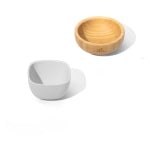
Bamboo and stainless steel can both work well for baby plates, but they suit different routines. Choose bamboo if you prefer a warm, natural-looking plate and a quick hand-wash routine. Choose stainless steel if dishwasher cleanup and long-term durability matter most. The plate’s size, shape, suction base, and care requirements may matter more in daily use than the material alone.
Bamboo vs. stainless steel baby plates at a glance
Bamboo: lightweight, warm to the touch, easy to wash by hand, and best dried immediately after cleaning.
Stainless steel: durable, dishwasher-safe when the product instructions allow it, and a practical choice for frequent use.
Both: available with removable silicone suction bases and divided or open layouts.
Neither: suitable for a microwave. Always follow the instructions for the exact product you own.
What is the best material for baby plates?
There is no single best material for every family. Start with the way you expect to use and clean the plate:
Choose bamboo if you value a natural finish and are comfortable with a quick wash, rinse, and dry after meals.
Choose stainless steel if the plate will be used several times a day, sent to daycare, or cleaned in a dishwasher.
Choose a suction base if your child is still learning to keep the plate on the table.
Measure the flat area of the high-chair tray before buying. A good material cannot compensate for a plate that does not fit.
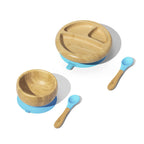
A divided plate can keep foods separate, while an open plate offers more room for mixed meals. Either layout can work; choose the one that fits the foods you serve and the way your child prefers to eat.
Are bamboo plates safe for babies?
A well-made solid-bamboo plate intended for food use can be used for baby meals when it is kept in good condition and used according to its care instructions. “Bamboo” alone is not a complete safety description, so check the product’s materials, finish, heat limits, and cleaning directions.
Solid bamboo and bamboo-fiber composite tableware are not the same product. If a plate is described as bamboo fiber, read the label to learn what binds the fibers together and whether the manufacturer permits hot food, a dishwasher, or a microwave.
Inspect a bamboo plate regularly. Stop using it if the eating surface develops cracks, splinters, deep cuts, persistent roughness, or a damaged finish. Hand-wash the bamboo body, avoid prolonged soaking, and dry it promptly unless the manufacturer gives different instructions.
Why choose a bamboo baby plate?
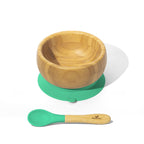
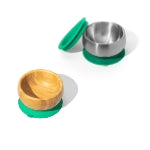
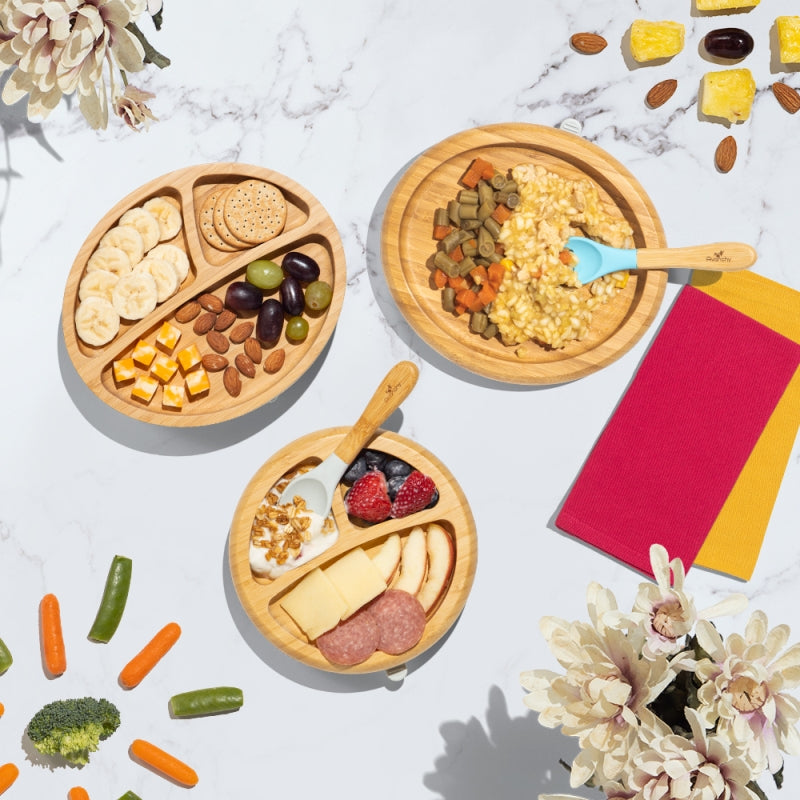
Bamboo has a smooth, natural appearance and feels warm in the hand. Avanchy bamboo plates pair a solid bamboo body with a removable silicone suction base. The base can help keep the dish in place during early self-feeding and can be removed as the child grows.
Avanchy recommends hand-washing its bamboo plate and drying it immediately. Bamboo is quick and easy to clean by hand: wash with mild dish soap, rinse, and towel-dry after each use. Avoid leaving bamboo soaking in water.
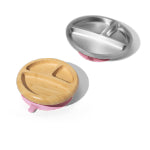
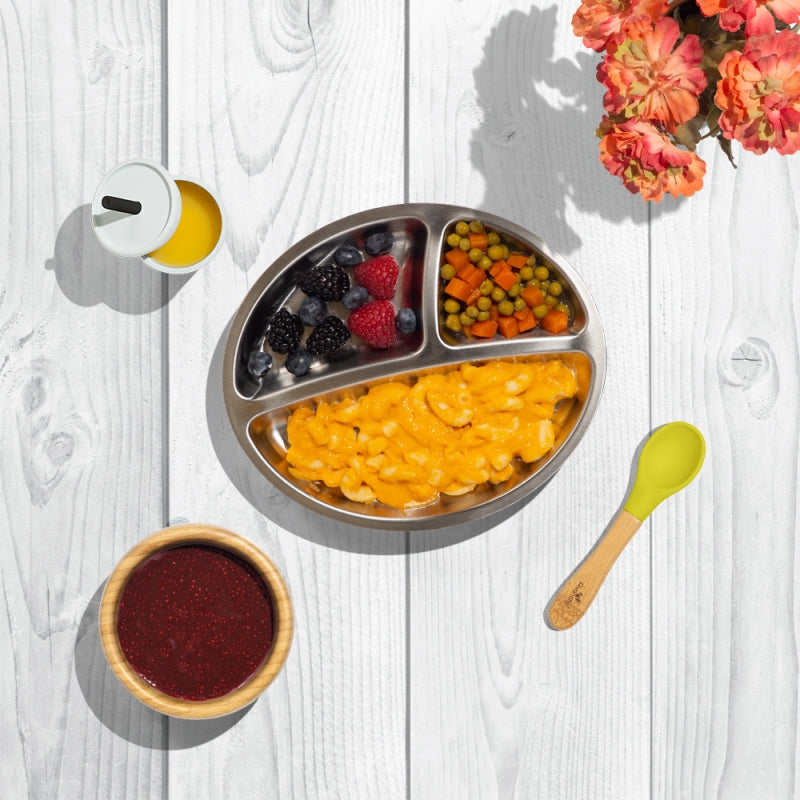
Stainless steel is a strong choice for frequent meals and simple cleanup. Avanchy’s divided suction plate uses type 304 (18/8) stainless steel with a removable silicone base. The plate is dishwasher-safe, but it should not be used in a microwave or oven.
Stainless steel can develop cosmetic scratches during normal use, especially with metal utensils. Smooth silicone, wood, or nylon utensils can help preserve the finish. Fine surface marks do not automatically mean the plate must be replaced, but sharp edges, deep pits, persistent rust, or damage that prevents thorough cleaning deserve attention.
Stainless steel wins when dishwasher convenience is the priority. Separate removable silicone parts so food and moisture do not remain trapped between pieces, then follow the care directions for each part.
Bamboo is easy to clean by hand: use mild dish soap and a soft sponge, rinse, then dry immediately. This short routine keeps the plate ready for the next meal without waiting for a dishwasher cycle. Avoid abrasive scrubbers and extended soaking because they can wear the finish or allow moisture into the material.
Which plate is better for travel or daycare?
Stainless steel is usually the more practical daycare option because it tolerates frequent cleaning and everyday handling. Bamboo is lighter and can travel well; wash, rinse, and dry it promptly after use.
For either material, confirm that the plate fits the child’s tray or table and that the suction base grips that surface. Suction works best on a clean, smooth, flat surface. Texture, crumbs, moisture, or a plate that extends beyond the tray can reduce the grip.
How to choose between bamboo and stainless steel
Choose your cleaning routine. A quick wash-and-dry routine points toward bamboo; dishwasher convenience points toward stainless steel.
Measure the tray. Compare the plate dimensions with the flat eating area.
Pick open or divided. Match the layout to the meals you serve.
Check the exact care instructions. Material labels do not replace the manufacturer’s directions.
Inspect the plate regularly. Replace any dish with cracks, sharp edges, splinters, deep pitting, or a damaged food-contact surface.
Some families use bamboo for meals at home and stainless steel for daycare or busy days. You can compare Avanchy’s suction baby plates by material, shape, and size before choosing.
Frequently asked questions
Is bamboo or stainless steel better for baby-led weaning?
Either can work. A stable suction base, suitable size, rounded edges, and a layout that fits the meal are the practical priorities. Choose the material whose cleaning routine you can follow consistently.
Can bamboo baby plates go in the dishwasher?
Avanchy recommends washing its bamboo plate by hand and drying it immediately. The routine is quick, and it avoids the heat, moisture, detergent, and long cycle of a dishwasher that can affect bamboo finishes over time.
Can stainless steel baby plates go in the microwave?
No. Metal must not go in a microwave. Avanchy’s stainless steel plate is also not intended for oven use.
Are bamboo-fiber plates the same as solid-bamboo plates?
No. Solid-bamboo dishes are shaped from bamboo, while bamboo-fiber products combine processed fibers with another material. Read the full material list and the manufacturer’s heat and care instructions.
How long should a baby plate last?
There is no fixed lifespan. Care, frequency of use, and surface damage all matter. Inspect the plate and suction base regularly, follow the care directions, and replace damaged parts or dishes that can no longer be cleaned thoroughly.
Subscribe
Sign up to get the latest on sales, new releases and more …